
Identity governance for energy and utilities
See who can reach operational and customer data, from field crews and contractors to shared accounts and AI agents, with proof for NERC CIP.
Get a demo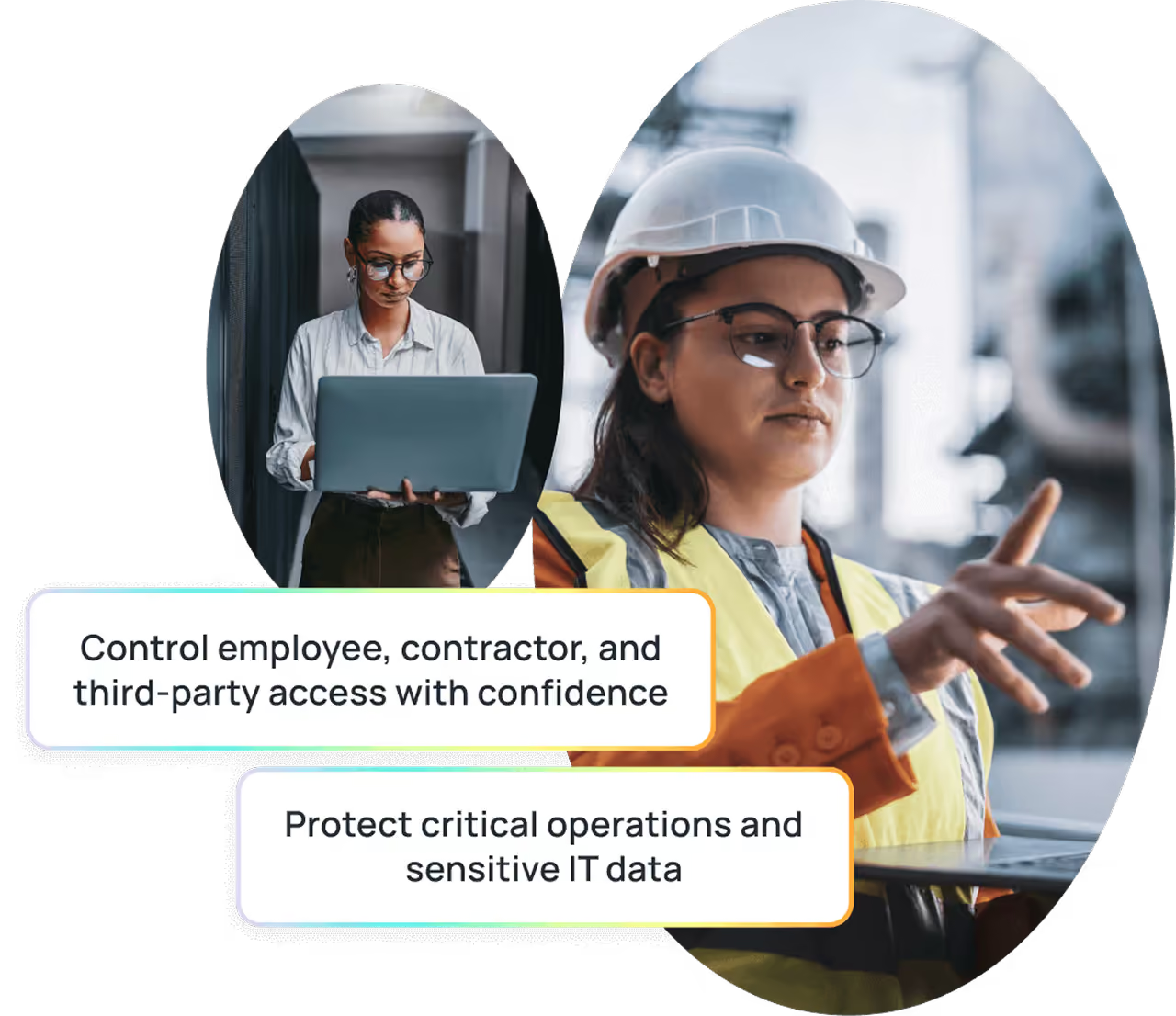
Who can access your operations and customer data?
One platform for every identity at your utility, with real usage behind each access decision.
Field and operations staff
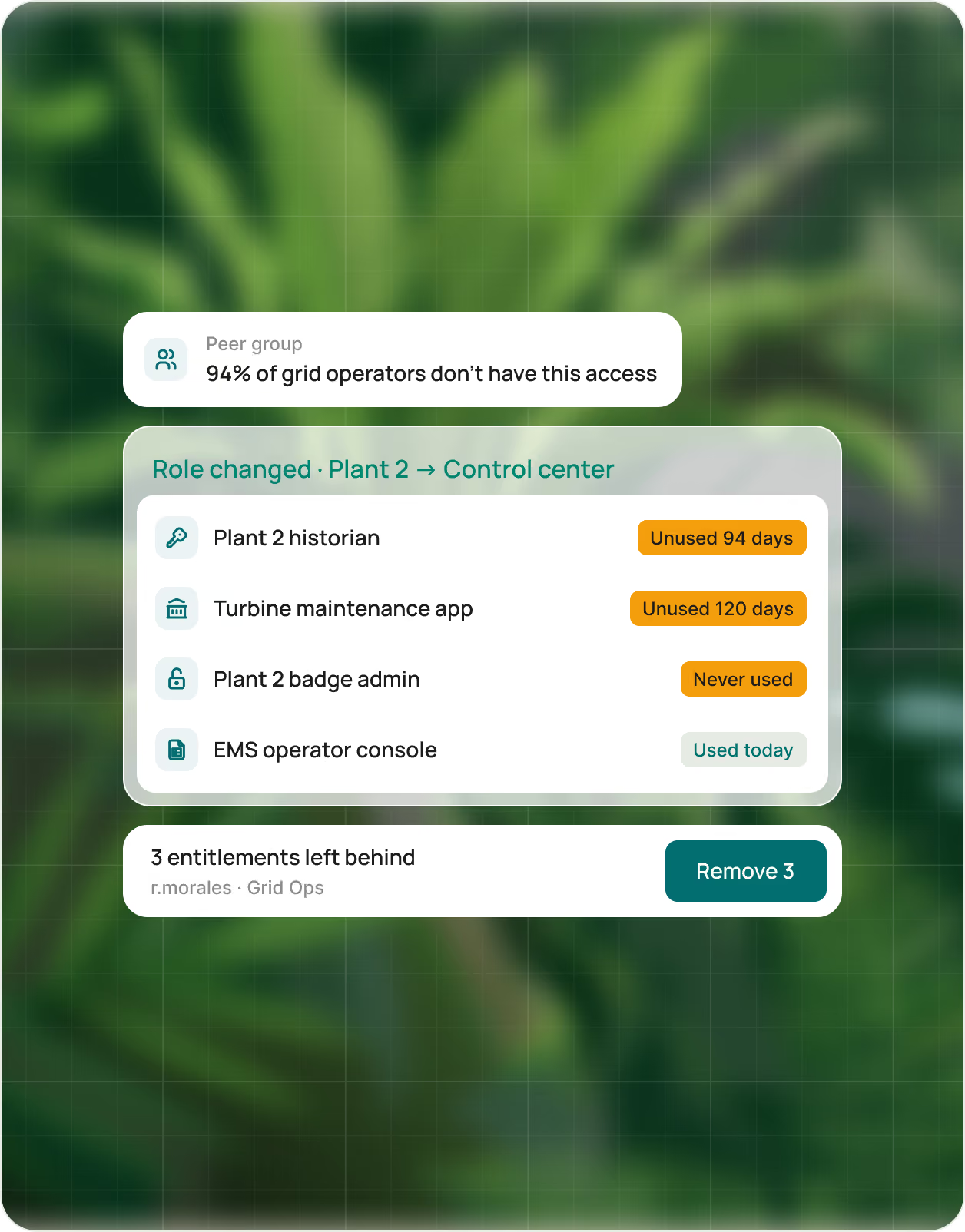
Operators, engineers, and field crews move between plants, substations, and projects. See what each person uses and remove access their new assignment doesn't need.
Contractors and vendors
Contractors, integrators, and equipment vendors work across your projects and systems. See what each one can reach, and end access when the work ends.
Shared and service accounts
Shared and service accounts keep operations running, and ownership is easy to lose. See who uses each one, what it can reach, and who is accountable for it.
AI agents and apps
AI agents and apps for forecasting, maintenance, and customer service connect to your data. See what each one can reach and who owns it.
Access reviews
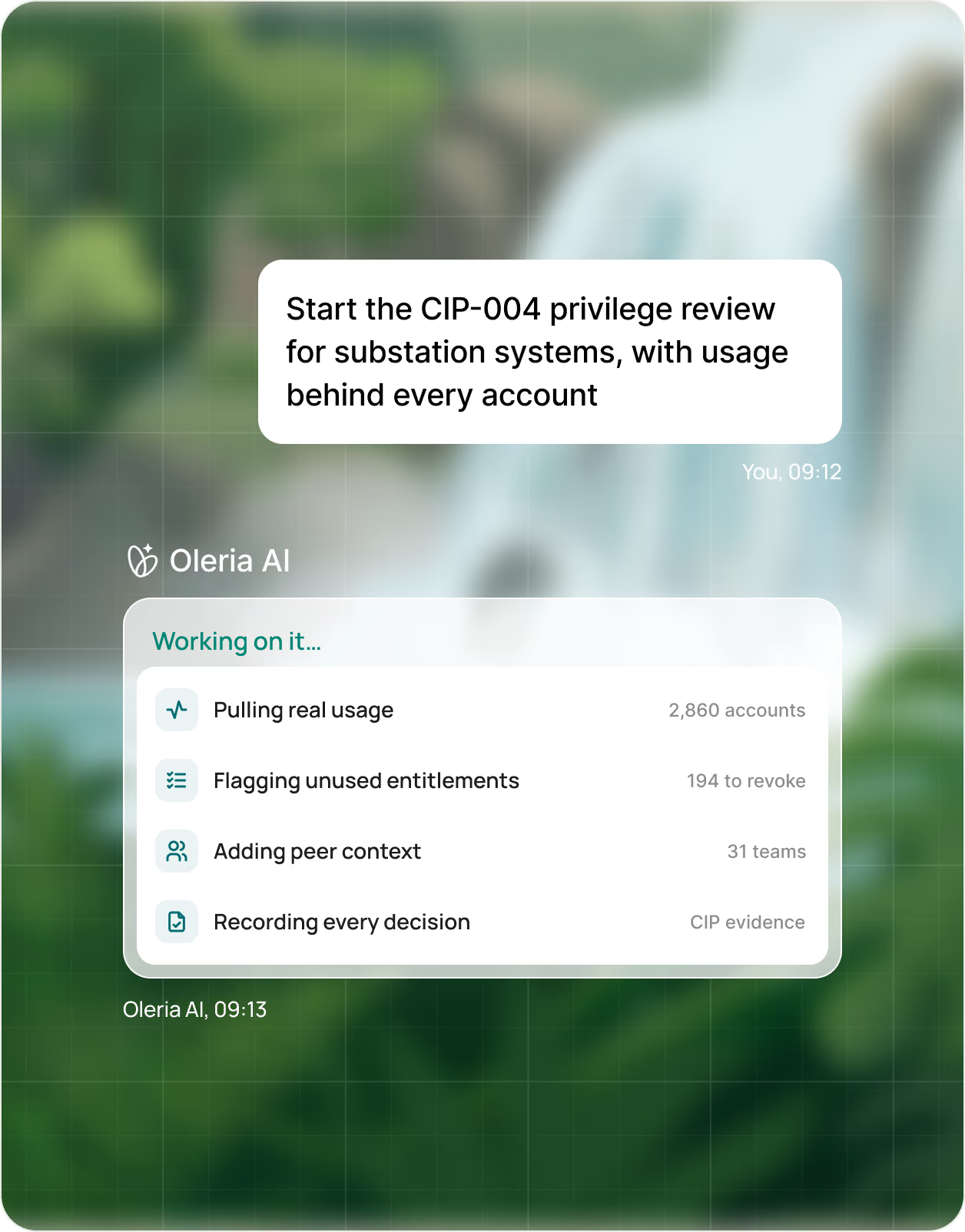
Run NERC CIP privilege reviews on real usage, with a record of every decision.
Least privilege
Remove access left behind by transfers, finished projects, and departed staff.
Data access governance
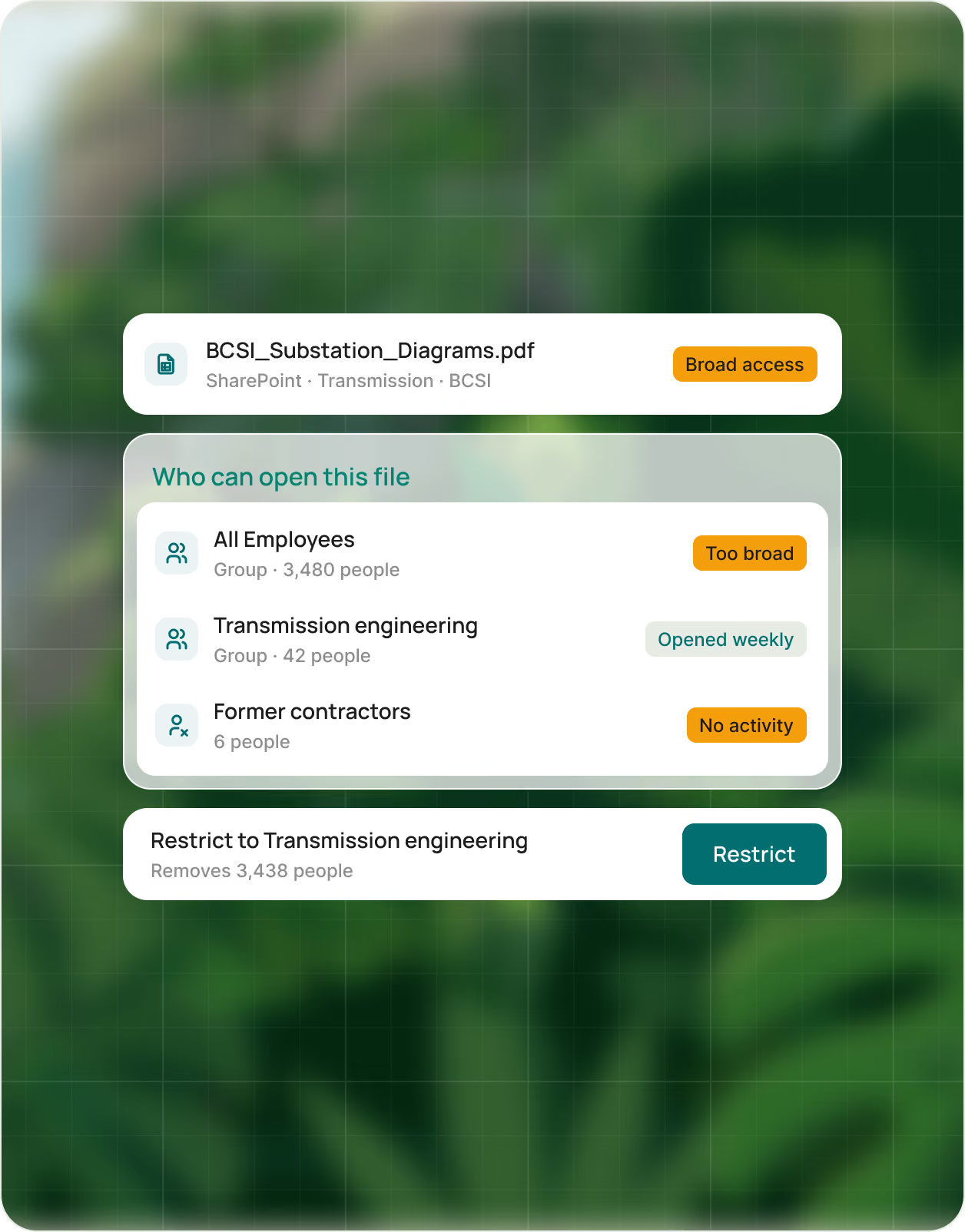
See who can open BES Cyber System Information in SharePoint and cloud storage.
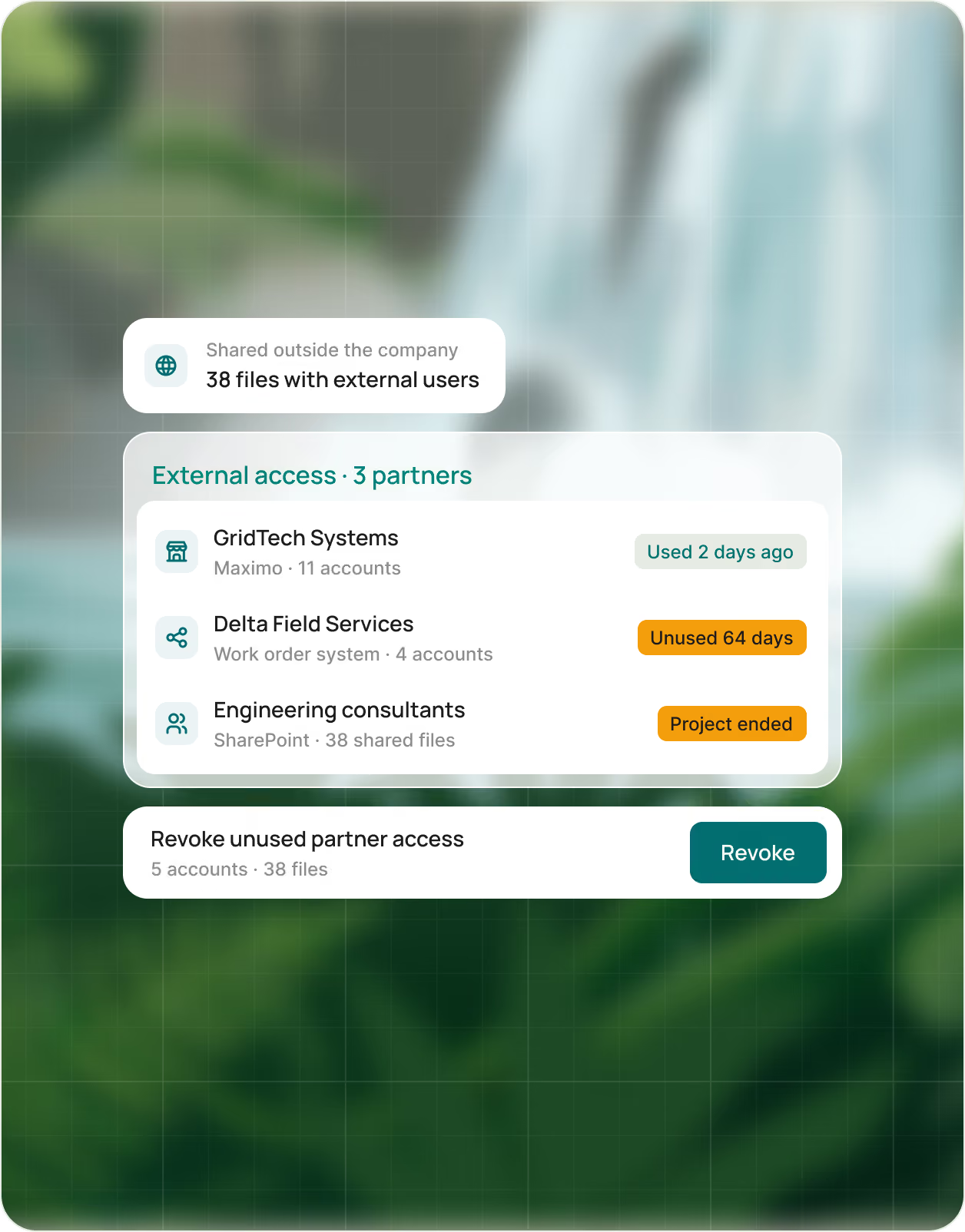
External access
See what contractors and vendors can reach, and revoke access when work ends.
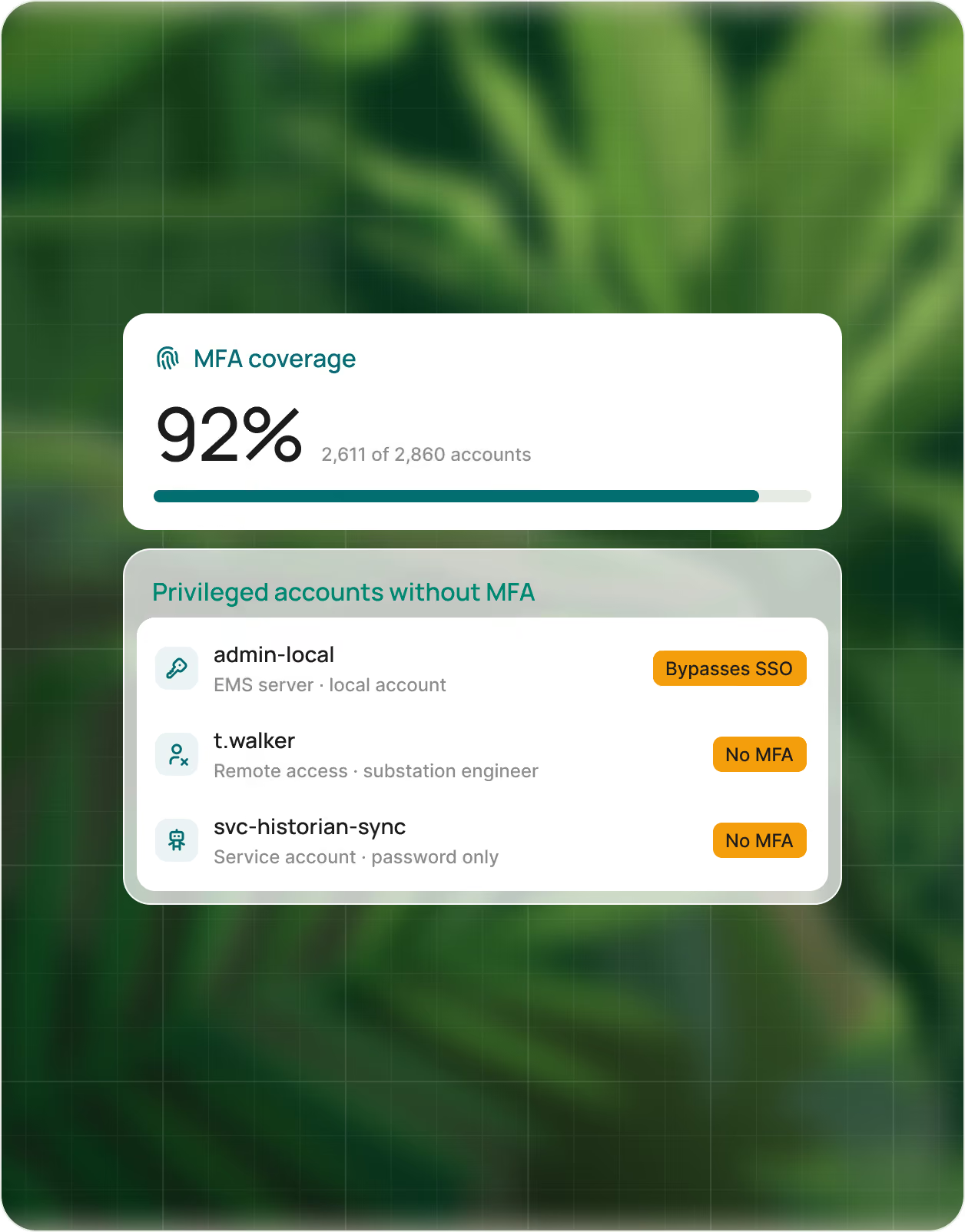
MFA & SSO coverage
Find remote and privileged accounts without MFA, including local accounts.
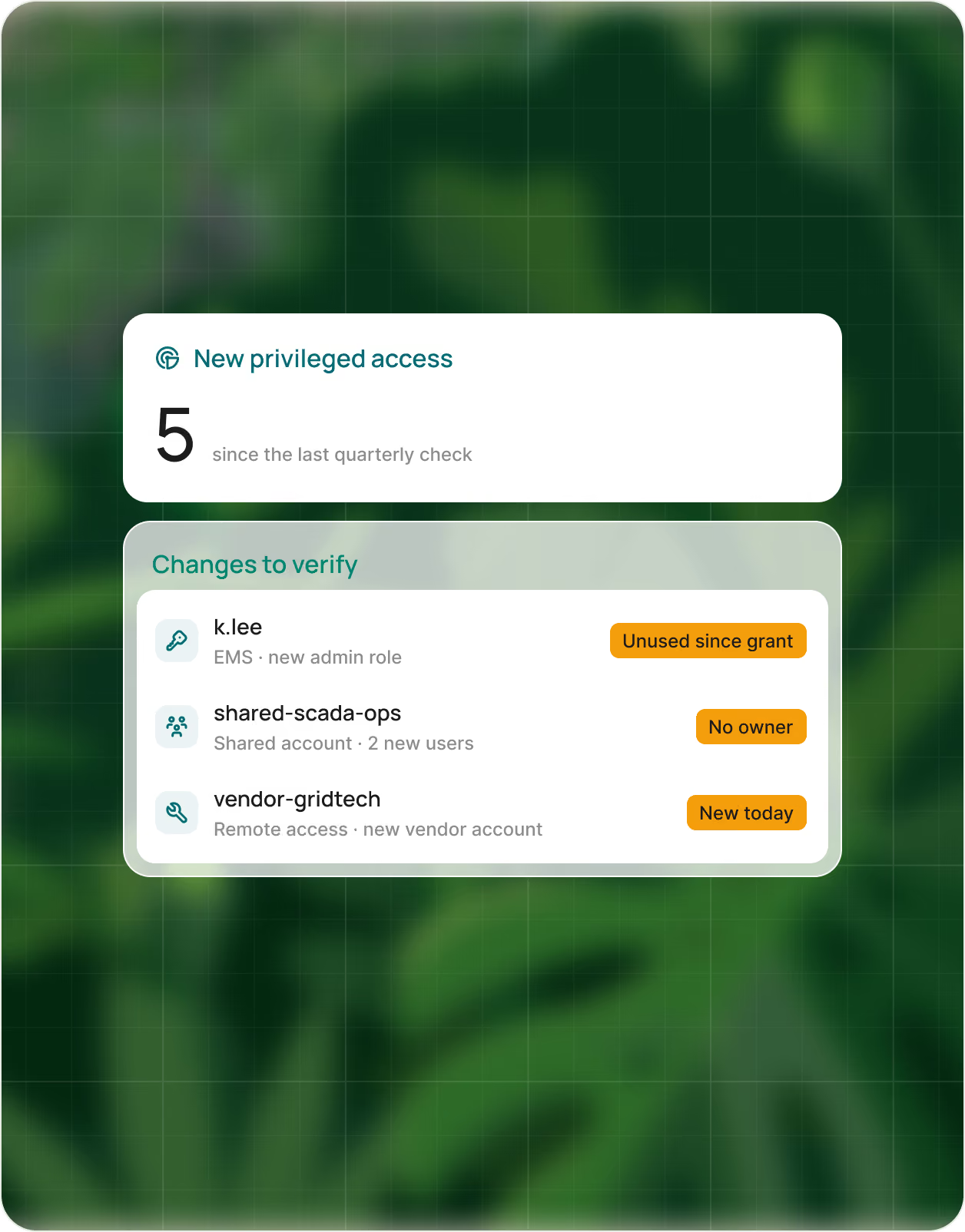
Identity risk monitoring
Catch new privileged access and changes between quarterly verifications.
Which energy regulations does Oleria support?
Map each access requirement to the evidence your compliance team and auditors ask for.
Questions about identity governance for energy and utilities
What is identity governance for energy and utilities?
Oleria MCP is an MCP server for identity governance. It lets the AI assistants, coding agents, and custom copilots your team already uses query and reason over your identity estate in natural language. No SDK, no new framework, no rebuilt workflows: if your client speaks MCP, it works with Oleria.
Identity governance for energy and utilities is how power, gas, and water companies control who can access operational systems and customer data. It covers employees, field crews, contractors, shared and service accounts, and AI agents, and produces the access reviews NERC CIP audits ask for.
How does Oleria support NERC CIP-004 access reviews?
CIP-004 asks you to verify every 15 months that accounts, groups, and privileges are correct and necessary. Oleria runs reviews with usage and peer context for each account in your connected systems and records every decision.
Can Oleria show who can access BES Cyber System Information?
Yes. Oleria connects to your identity provider, cloud platforms, and developer tools such as GitHub, and shows who can reach what in each, alongside how that access is actually used.
Yes, when BCSI is stored in connected locations such as SharePoint or cloud storage. Oleria shows who can open each file or folder, how they got access, and when they last used it.
Does Oleria connect to operational technology systems?
The MCP (Model Context Protocol) endpoint exposes Oleria AI's reasoning and graph to any MCP-compatible client — Claude, ChatGPT, your internal copilots, or custom agents. Teams can query Oleria in natural language ("show me everyone with prod AWS access who hasn't logged in for 30 days"), pull context into agentic SOC and IAM workflows, and use the result inside the tools they already trust. The endpoint is read-only by design: agents reason.
Oleria governs access in your identity provider, directories such as Active Directory, cloud, and SaaS apps. Ask our team about coverage for specific operational systems.
How does Oleria govern contractor and vendor access?
Access reviews and provisioning, external access oversight, risk monitoring, incident investigations, unused and unintended access detection, and authentication posture monitoring. The same unified graph and Oleria AI reasoning underpin every one of them — which is what makes Trustfusion feel like one platform rather than a suite of point tools.
Oleria shows what each contractor and vendor can reach across your connected apps, what has been shared with them, and when it was last used, so you can remove access when the work ends.
Learn more about identity governance for energy & utilities
Customer stories and assessments on securing access across critical infrastructure and regulated systems.
Read More
Read More
Read More