The identity context your agents have been missing
Plug Oleria into the agents your team is already building, so they can finally reason about who has access to what, why, and what to do about it.
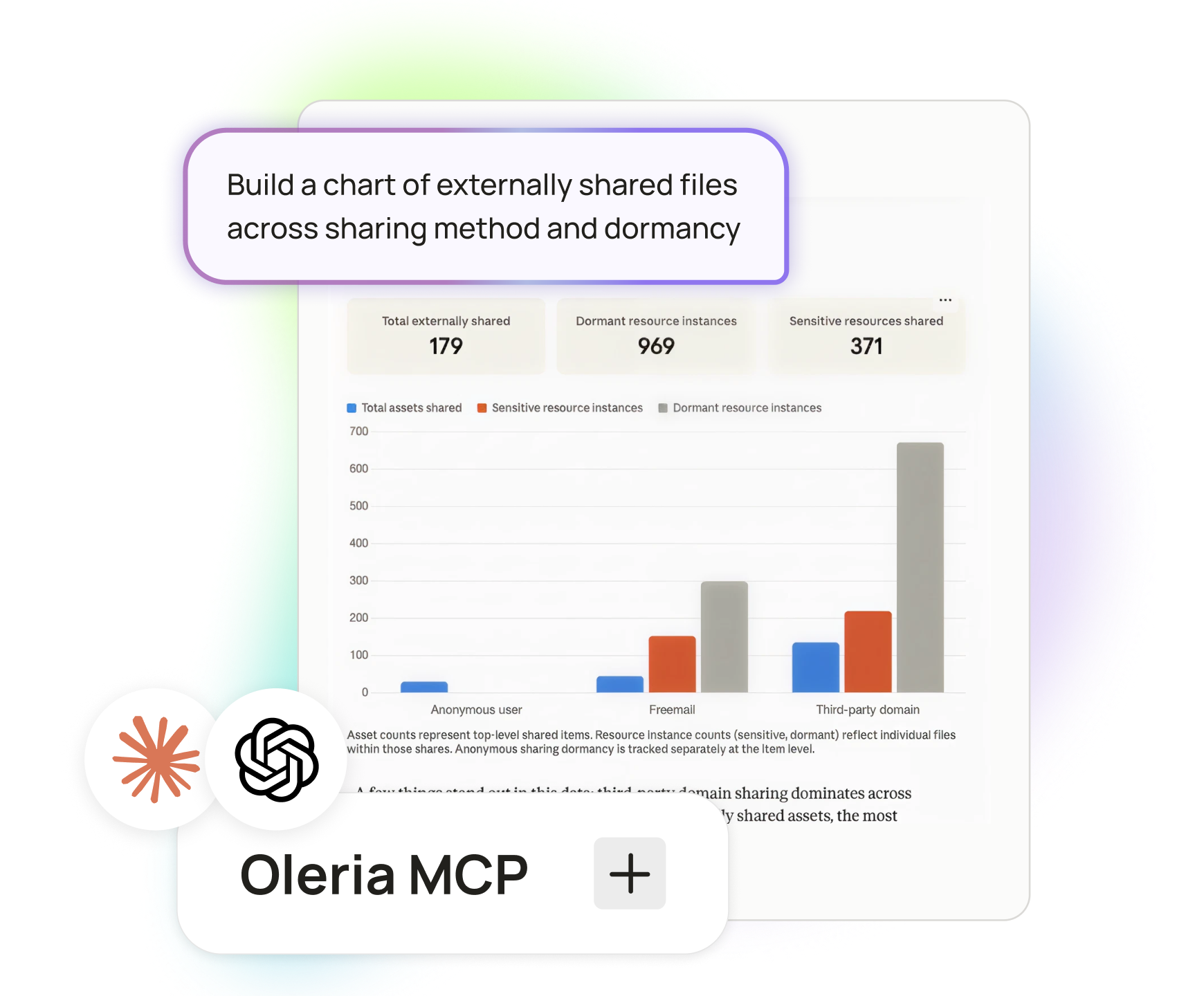
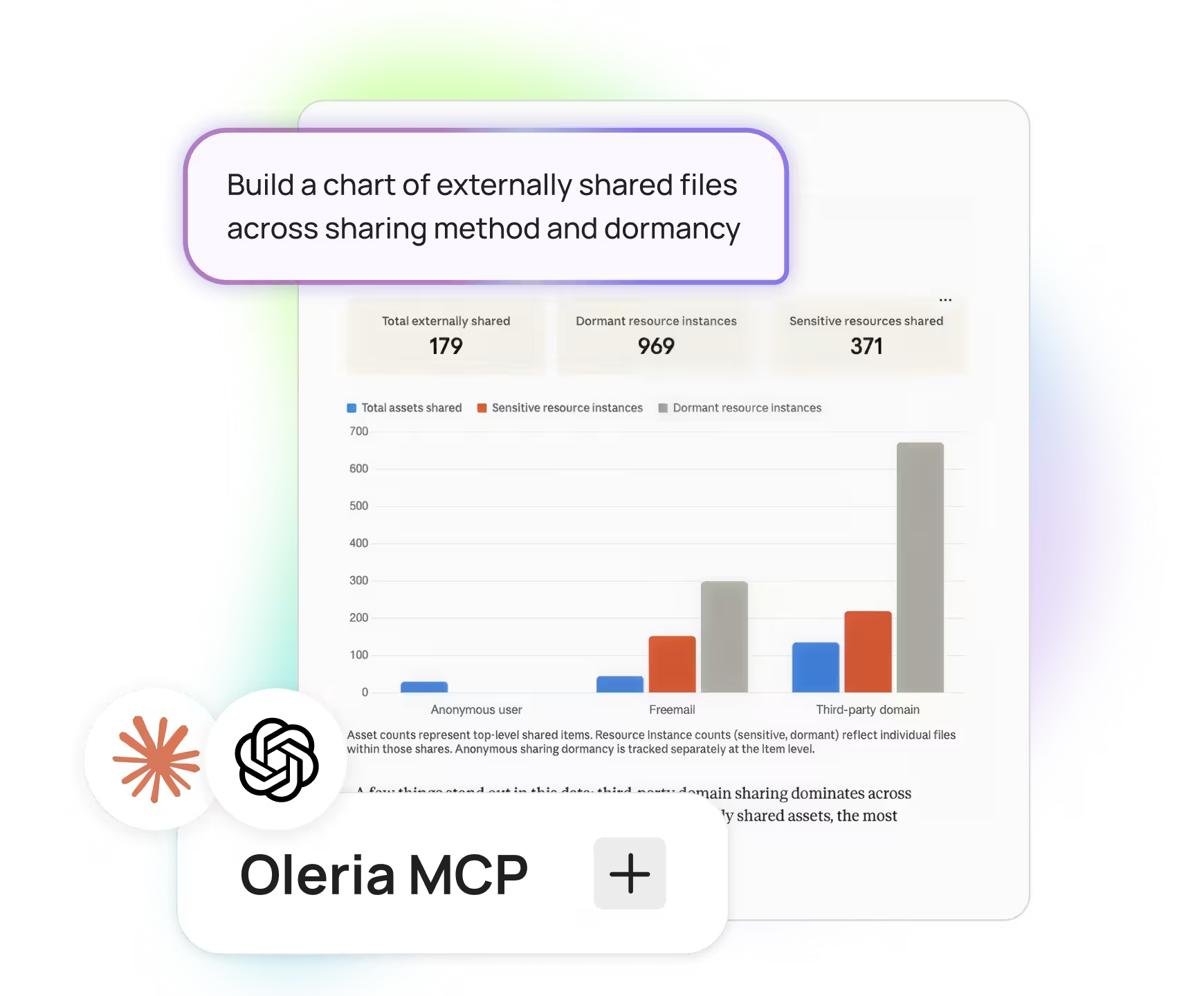
Drops into the clients your team already uses
Anthropic's Claude, OpenAI's ChatGPT, and the agents you built in-house — anything that speaks MCP. No new tool to roll out, no team to train, no integration project.
Built on the Trustfusion platform
Oleria MCP is powered by Trustfusion, built on a live identity graph and continuous usage insights. Every response inherits Trustfusion's identity context: peer comparisons, usage patterns, dormancy, and drift.
Read-only by design, audited end-to-end
Agents query, summarize, and reason. They don't act on your identity estate. Connections authenticate through your existing IdP, every query is audited, and agents inherit the same permissions as the human they're working alongside.
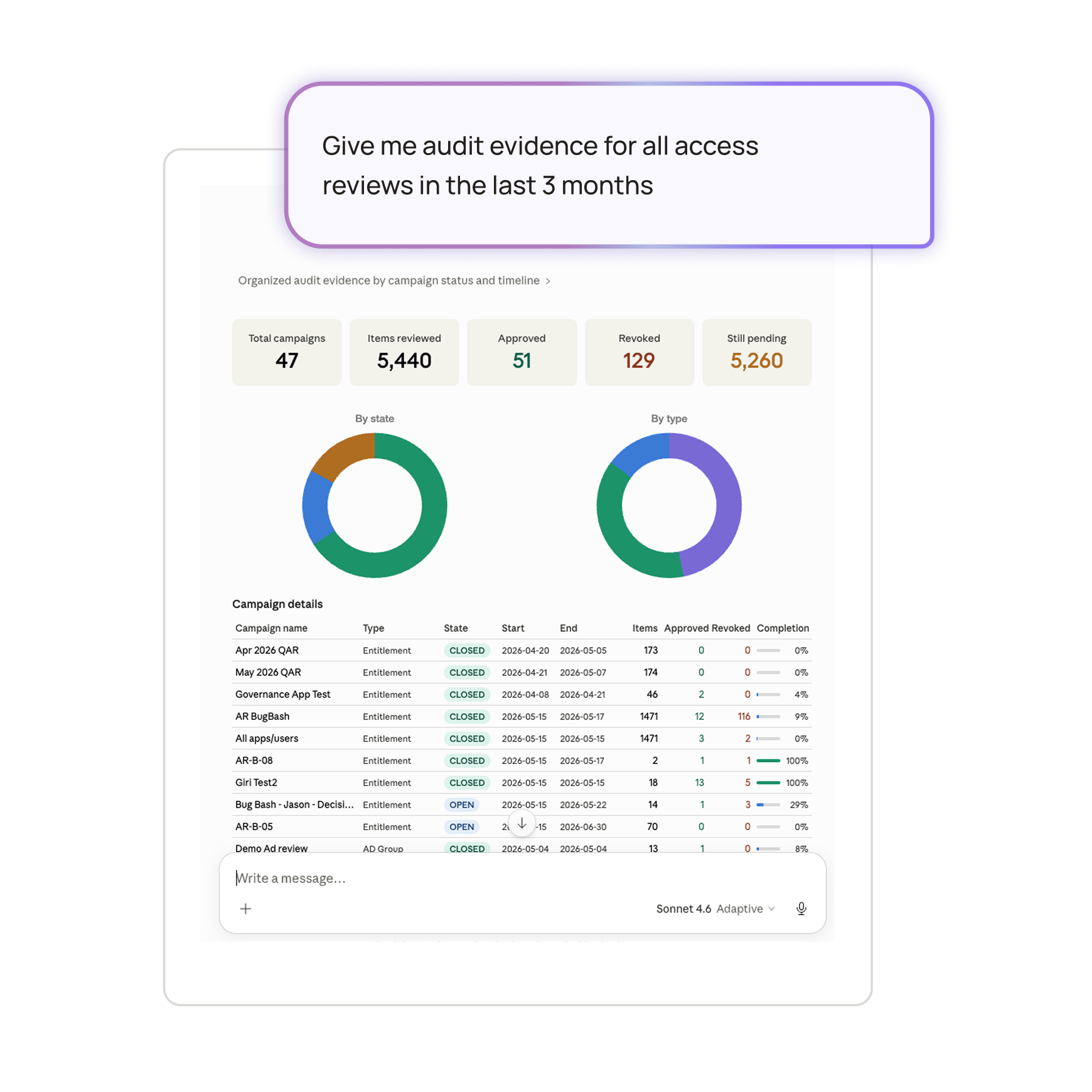
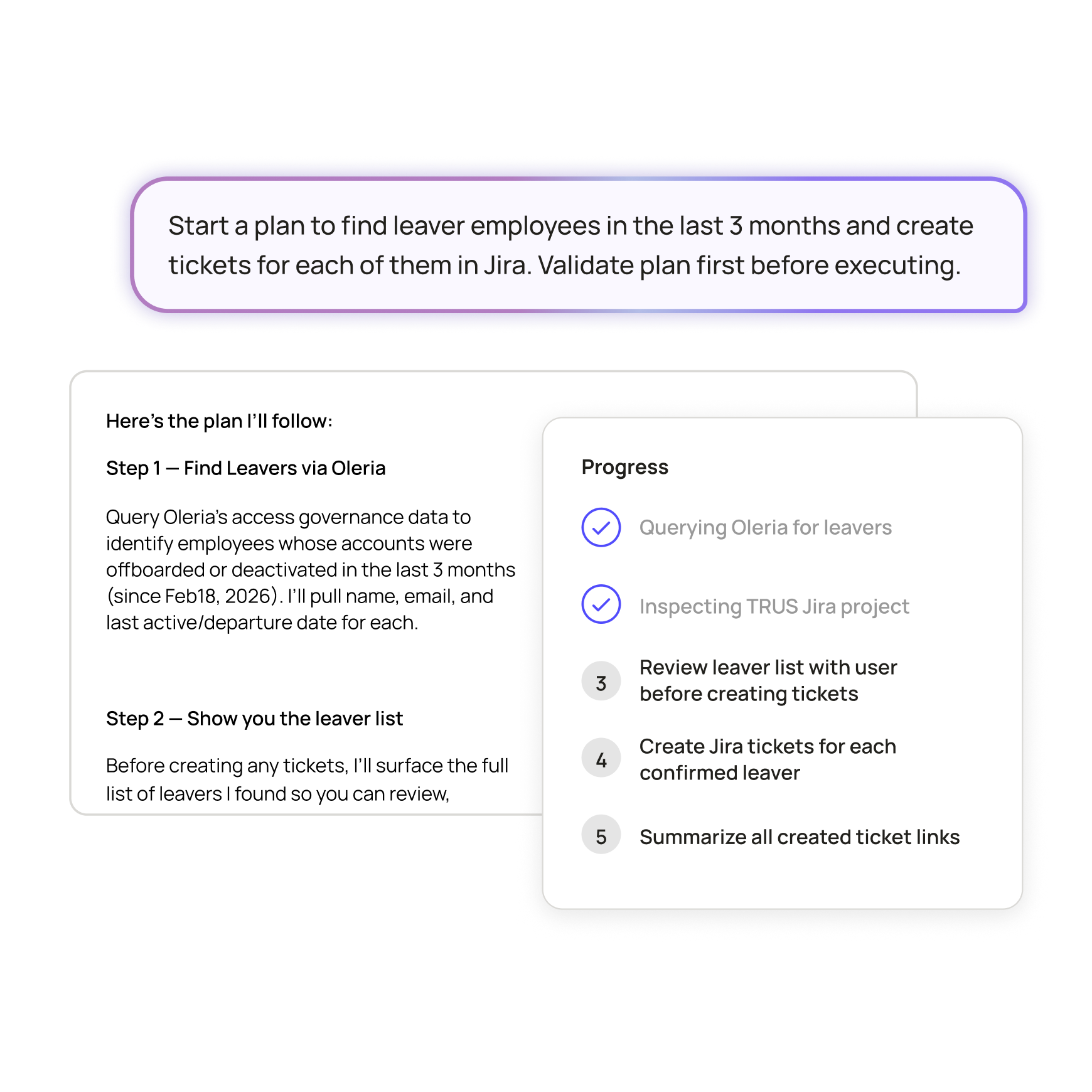
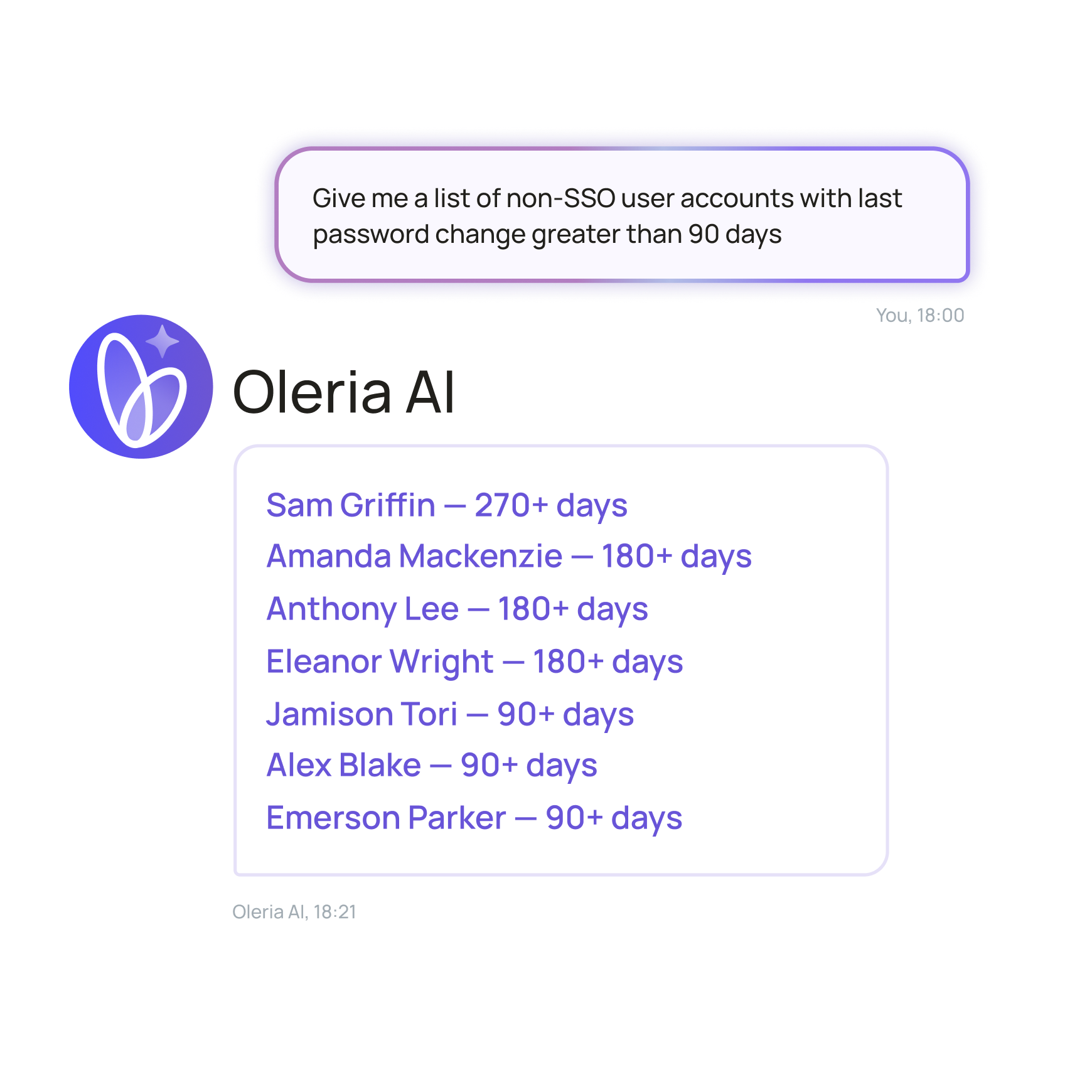
Wherever your agents are, Oleria is one prompt away.
Oleria MCP works with every major MCP-compatible client, and any custom agent your team builds on the open MCP spec. Turn it on once; the agents your team already trusts inherit Oleria's full identity intelligence.
Frequently asked questions
What is Oleria MCP?
Oleria MCP is a first-class endpoint on Trustfusion, Oleria's identity intelligence platform, that exposes Trustfusion's identity reasoning to any MCP-compatible client. It lets the AI assistants, coding agents, and custom copilots your team already uses query and reason over your full identity estate, in natural language. No SDK, no new framework, no rebuilt workflows. If your client speaks MCP, it works with Oleria.
Which AI clients work with Oleria MCP today?
Every major MCP-compatible client. That includes Claude, ChatGPT, Cursor, Claude Code, and any custom agents your team has built on the open MCP spec. New clients added to the MCP ecosystem work with Oleria automatically. No platform update required.
Is it safe to let agents query our identity data?
Yes. Every connection authenticates through your existing identity provider. Agents inherit the same permissions as the human they're working alongside, so they can never see more than that user already could. Every query and response is audited end-to-end. And the endpoint is read-only: agents query and reason; they don't modify anything in your identity estate.
Can agents take action through Oleria MCP, or only read?
Read-only. Oleria MCP gives agents the ability to query, reason over, and summarize your identity estate. It does not let them modify it. When something needs to change (revoking access, approving a request, removing an entitlement), that happens in Oleria's standard governance workflows, with human review. Agents inform your team's decisions; the action itself stays in your governance system.
Do we need to be an existing Oleria customer to use Oleria MCP?
Yes. Oleria MCP is built on Trustfusion, Oleria's identity intelligence platform, which means it inherits Trustfusion's connector coverage, governance workflows, and reasoning. If you're already an Oleria customer, the MCP endpoint is available to you today. If you're not, a single demo gets you both.
How is this different from a generic identity API?
Most identity APIs return rows. Oleria MCP returns answers. The difference is Trustfusion. Peer comparisons, usage insights, dormancy, and drift run underneath every response, with citations your team can defend in an audit. Generic APIs ask the agent to do the thinking. Oleria does the thinking and lets the agent communicate it.
Does Oleria MCP cost extra?
Oleria MCP is included with every Oleria platform license. There's no separate MCP tier and no per-query pricing.
How does Oleria MCP stay current with our identity estate?
It runs on Trustfusion, Oleria's identity intelligence platform, continuously synced with your IdP, HRIS, SaaS, cloud, and directory systems. There are no nightly exports, no snapshots, no staleness. The moment your identity estate changes, your agents see the change.
Plug Oleria into every agent your team is already building
Your agents can finally answer the questions that matter: who has access to what, why, and what to do about it. It's read-only, authenticates through your existing IdP, and inherits the full access graph underneath.