
Identity Risk Monitoring
Point-in-time audits miss daily risk
Track new identity risks as they appear, see which findings are aging past SLA, and spot policy gaps before they turn into breaches.
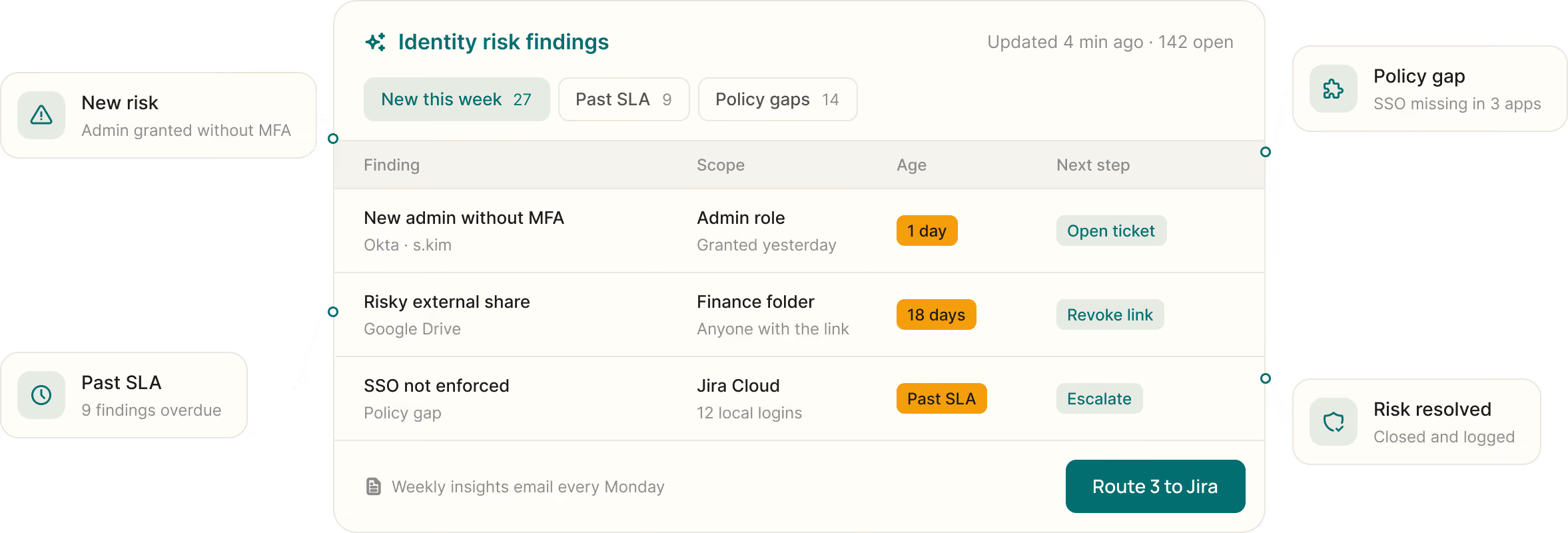
Point-in-time audits miss daily risk
New risks appear daily
A new admin without MFA or a fresh external share won’t wait for the next audit.
Findings that never close
Risks get logged, then sit open for months with no one chasing them.
Policies rolled out halfway
MFA or SSO policies reach some apps and miss others, and no one notices.
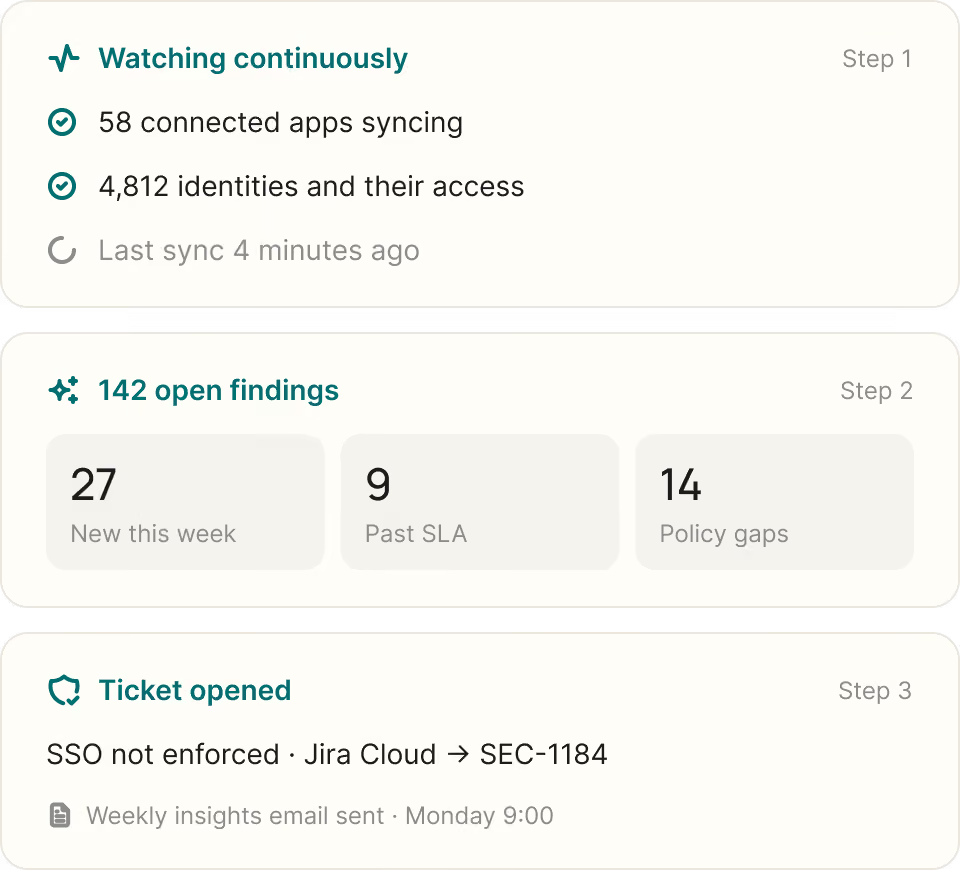

How Oleria monitors identity risk over time

Watch continuously
Oleria analyzes identity, access, and activity data from your connected apps and surfaces new risks as they appear.

Track aging and SLAs
Every finding shows its age, severity, and SLA deadline, so overdue risks rise to the top.

Report and act
Send scheduled insight emails, open Jira or ServiceNow tickets, and fix supported risks directly in Oleria.
What continuous monitoring changes for your team
For security
New Risks Seen Early A new admin without MFA or a fresh external share surfaces as it appears.
For IAM
Findings That Get Owned Age, severity, and SLA on every finding, routed to Jira or ServiceNow.
For security leaders
A Regular View of Risk Scheduled insight emails summarize the risks your team cares about.
For GRC
Less Manual Checking Continuous monitoring instead of point-in-time snapshots.
Real customers. Real results.
Security teams use Oleria to clean up excess access, get through audits faster, and bring AI agents under control


Oleria is one of those things that once you see it and get it, it’s hard to imagine doing what you’ve been doing without it.


Being able to assess the current state and optimize around least privilege provides the ROI in itself. And the ability to understand what my engineers need will help us provide least-privilege access.


Oleria gives us unparalleled visibility into identity access and usage, saving time and strengthening our compliance posture.

Questions about identity risk monitoring
What is identity risk monitoring?
Identity risk monitoring continuously watches identities, access, and activity for new risks, such as an admin without MFA, a dormant privileged account, or a risky external share. Oleria surfaces each risk as it appears, ranks it by severity, and tracks it until it is resolved.
How is identity risk monitoring different from ISPM?
Identity security posture management (ISPM) finds and fixes your current identity posture. Risk monitoring keeps watching after that, so new risks, aging findings, and partial policy rollouts surface as they happen.
How often does Oleria check for new risks?
Oleria ingests data from connected apps continuously and updates findings as each app syncs, so new risks appear without waiting for a scheduled audit.
Can Oleria send regular risk reports?
Yes. Set up a scheduled insights email, for example every Monday, that summarizes the activity and risk records your team cares about.
What happens to a risk nobody fixes?
Findings approaching or past their SLA are surfaced first. Route them to Jira or ServiceNow so someone owns the fix, or remediate supported risks directly in Oleria.
Learn more about identity risk monitoring
Guides and research on spotting risky access, toxic combinations, and identity threats as they happen.