Visibility
ServiceNow
IAM Engineer
SaaS
Complete your ServiceNow integration credential inventory and make it audit-ready in hours, not weeks

Quick Summary: ServiceNow environments accumulate integration credentials — REST API keys, OAuth clients, MID server service accounts — that auditors ask about and security teams struggle to inventory manually. Oleria, an AI-native identity security & governance platform, completes your full ServiceNow credential inventory and makes it audit-ready in hours, not weeks.
ServiceNow holds your IT operations record - incident, change, CMDB. Integrations into it accumulate for years: REST and SOAP inbound connections, OAuth apps, scheduled imports, business rules calling external APIs. Each is an NHI. Most ServiceNow admins have never enumerated them as a category - and when the auditor asks "show me every integration with admin access," it becomes a multi-week investigation.
ServiceNow's identity model includes regular users, service accounts (sys_user records flagged as "service"), OAuth applications, REST and SOAP integration endpoints. Integration developers typically create dedicated service accounts per integration - some get created with admin role because that was simpler. Over years, dozens of service accounts accumulate, most rarely reviewed.
The pattern at most enterprises: ServiceNow holds the IT system of record; integrations into it from monitoring tools, ticketing systems, CMDB feeds, asset management, and custom apps each bring their own credential. The auditor question "show me every integration into ServiceNow with admin access" is a multi-week investigation - because the category-level inventory has never been built.
Oleria continuously discovers and maps your ServiceNow Integration Credential Inventory, so every service account, OAuth app, and integration user is visible and audit-ready on demand.
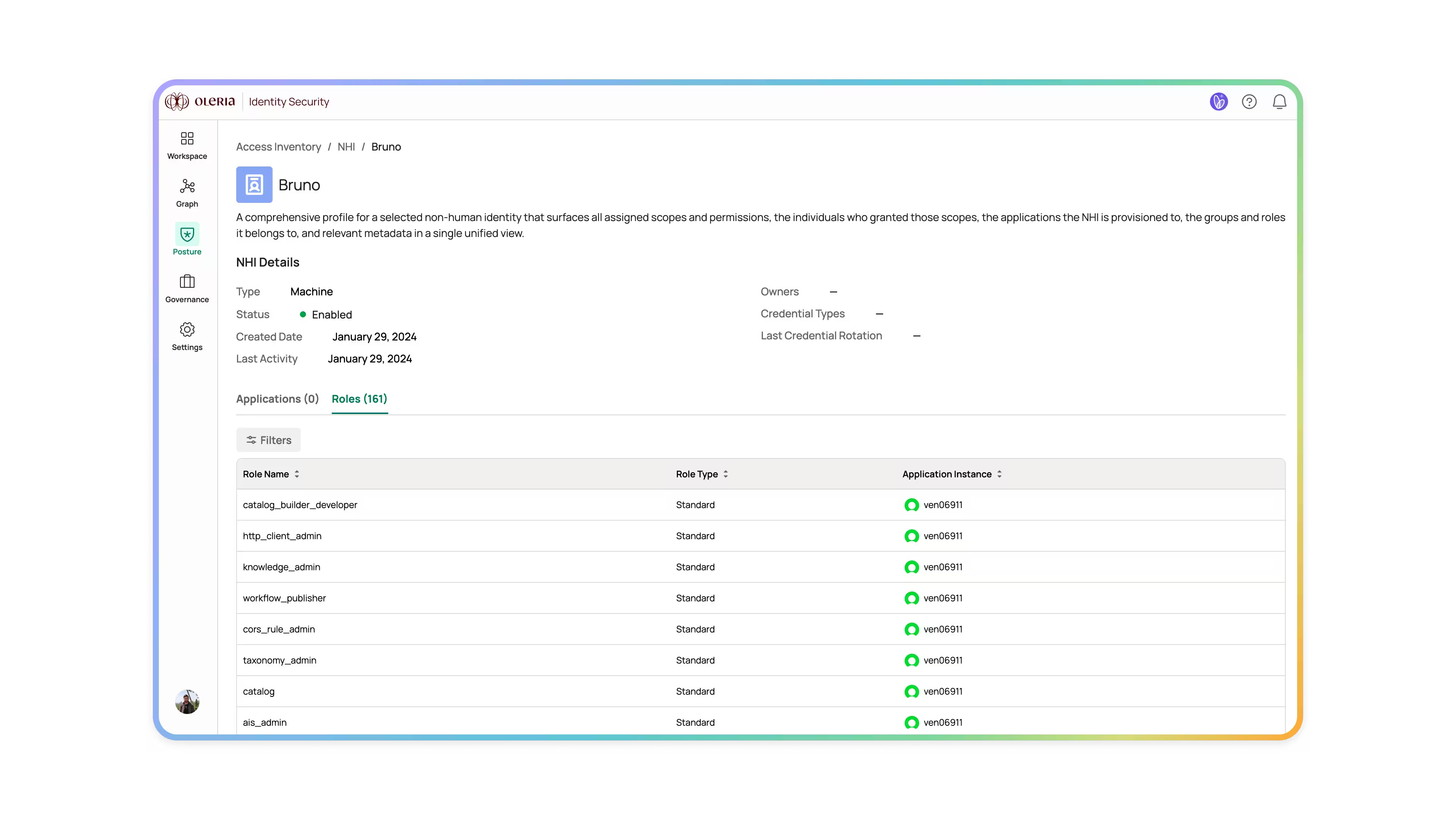
Every service account, OAuth application, and REST/SOAP integration user across connected ServiceNow instances, with per-account role and group assignments.
Service accounts holding admin or security_admin role flagged automatically as the review priority, not buried in a flat list.
Which tables each service account can read or write - with privileged tables (sys_user, sys_user_role, audit) flagged separately so you know the real blast radius.

Yes - cross-domain service accounts surface with domain context. Scoped-app service accounts surface with their app scope.
Connect each instance; service accounts across all surface in one inventory.
All major ServiceNow integration credential types are inventoried: service accounts, OAuth application registrations, REST and SOAP integration users, and MID Server service accounts.
SOC 2 CC6 and ITGC controls require evidence of periodic access review for privileged accounts. The continuously refreshed inventory with role assignments, last-used dates, and named owners produces the access listing auditors request.
Stale credentials - those with no authentication activity in 60 or 90 days - surface in the inactive credential view regardless of whether the integration they served still exists.